When to Harvest Herbs in the UK: A Month-by-Month Calendar

A herb picked in the wrong week is a herb wasted. Cut mint after it has flowered and the leaf tastes of hay. Snip coriander in the heat of a July afternoon and it wilts before it reaches the kitchen. Timing is most of the flavour — and most of the potency, if you grow for medicinal use. What follows is a working calendar for UK gardens: not a rigid schedule, but a rough map of when each herb is at its best.
The Rules That Matter More Than the Calendar
Pick leaves just before the plant flowers. Once energy moves into buds and seed, leaves toughen and the aromatic oils thin out. This is why mint, coriander and basil taste so much better cut young and often.
Cut in the morning, once the dew has dried but before the sun has warmed the plant. Oils are at their most concentrated then, and the leaves are firm rather than limp.
Never strip more than a third of a plant in one go. Soft herbs such as chives, mint and basil will regrow within a fortnight if you leave them something to work with. The UK's north–south spread matters too: a garden in Cornwall can run two or three weeks ahead of one in Aberdeenshire, so treat the months below as windows rather than dates.
Which part you are after changes the timing as much as the month does. Leaf herbs want the weeks before flowering. Seed herbs want the moment the seeds turn from green to fawn but have not yet shattered. Flower herbs such as lavender and chamomile want fully open blooms on a dry morning. Root herbs are lifted in autumn, once the top growth has died back and the plant has stored its goodness underground.
Spring: March to May
Chives are usually the first to earn their place in a bowl, ready at around 15cm. Snip them to 2–3cm from the base and they will come again three or four times before summer. Wild garlic, sorrel and the first mint and lemon balm follow.
April is as much about care as cutting. Give thyme, oregano, sage and winter savory a light trim — the soft tips only, never down into old wood, which rarely regrows on sage and rosemary. Parsley sown last year is at its peak now, so keep cutting it; leave a biennial parsley alone and it will run to seed in its second summer and give you nothing but flowers.
By May, French tarragon, chervil and lovage are ready for sprigs, and thyme and oregano are approaching their best moment: in bud, just before the flowers open.
Early Summer: June and July
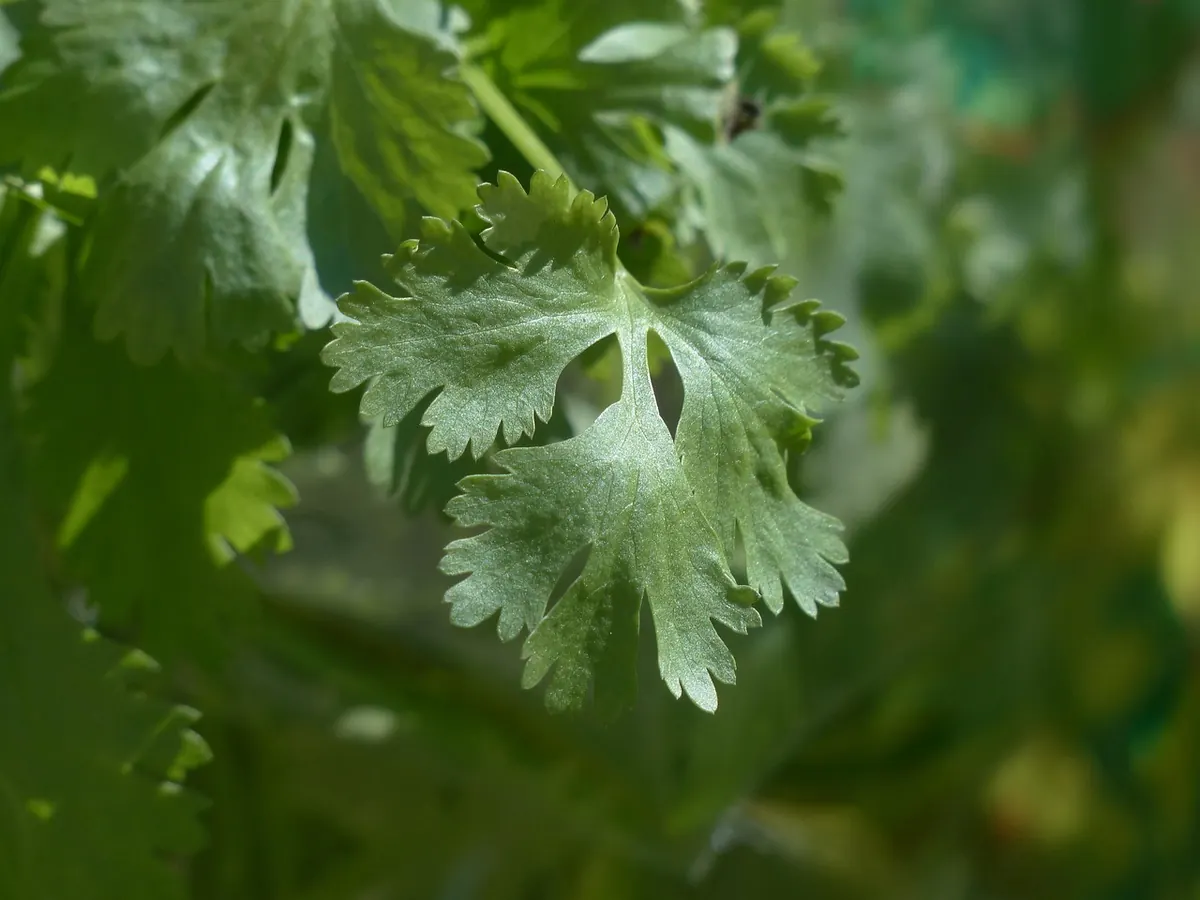
This is the peak. Mint, coriander, dill, marjoram and basil all give generously, provided you keep cutting. Coriander bolts at the first sign of heat or dryness, so either sow it in succession every three weeks or let it flower — the seed is worth having.
Basil needs patience here. Don't cut it until the nights are reliably warm and the plant is pushing out new pairs of leaves fast enough to keep up with you. A cold June stalls it, and stalled basil turns sulky and yellow. Even then, pinch the growing tips above a pair of leaves rather than taking whole stems; that is what makes a bushy plant instead of a leggy one. If you take a leaf, pinch a tip — that is the whole trick with basil.
Lavender is a July job. Cut the flower spikes just as the buds open, on a dry morning, and never cut down into the woody base: lavender, like rosemary, will not regrow from old wood. Damp lavender goes grey and mouldy in the bag, so harvest on a dry day or not at all. Hyssop and the first marjoram flowers follow, and rosemary can be trimmed lightly once it has finished flowering, though the stems for the kitchen are best taken from new growth.
Keep an eye on the watering can through July. A stressed plant makes tough, peppery leaves — perfectly edible, but not what you want for a delicate salad or a batch of pesto.
High Summer: August and September
August is the month for drying as much as for picking. Thyme, oregano and marjoram are at their most aromatic now, and the classic moment is when the plants are in bud or just coming into flower, when the essential oils peak. Cut whole stems, bundle them, and hang them somewhere warm, dark and airy. Sage follows the same rule: take a few leaves at a time, or a soft stem or two, but never scalp the bush before winter.
Mint will give a second flush if you cut it back hard after flowering — some growers take the whole plant down to about 5cm to force fresh, tender leaves for late summer. Chives will be tired and thin by now; cut them and let them rest. Basil keeps going until the first cold nights, at which point the leaves blacken and the game is over.
Seed heads are the other August harvest. Let coriander, dill and fennel run on until the seeds turn from green to fawn, then cut the heads into a paper bag and hang it somewhere dry. Coriander seed, dried and crushed, is a spice in its own right, and fennel seed is worth the space it takes. Angelica and lovage seed can be collected the same way.
Autumn: October and November
Autumn is about roots, seeds and slowing down. Horseradish is lifted from October onwards, on a dry day, once the leaves have been knocked back by frost — and dig deep, because a broken root will spread. Parsley root, if you grow it, and angelica root come up now too. Wash them, use them fresh, or dry them in slices.
Leaf picking continues, but more gently. Thyme, sage and winter savory can all be taken in small amounts through mild autumn weather, and a light tidy-up now keeps the plants compact for spring. Rosemary is the exception: it dislikes being cut late in the year, and a hard trim in October can leave it vulnerable to a wet, cold winter. Wait until spring.
Any soft herb still standing — chervil, coriander, the last of the basil — should be used or preserved now. Frost finishes most of them off, and there is no point pretending otherwise. In colder parts of the country that can happen in early October; in Cornwall you may still be cutting coriander at the end of November.
Winter: December to February
Winter is the lean season, but it is not empty. Bay, rosemary, sage, thyme and winter savory can all be picked in small quantities from a sheltered garden, and bay is arguably better after a cold snap. Take individual leaves rather than branches, only from healthy plants, and avoid cutting on a frosty morning when the leaves are brittle and snap.
This is also the season to plan. Order seed, decide where the coriander will go so that it does not bolt in the first hot week, and start a pot of parsley, mint or chives on a bright windowsill for a February cut. Windowsill herbs are pale and soft compared with garden ones, but they will do for a winter omelette.
If you garden somewhere mild, a cloche or a strip of fleece will keep flat-leaf parsley and chervil going through the worst of it. North of the border, the honest answer is that the winter harvest is whatever survived.
Preserving the Glut: What to Do With an Over-Picked Basket
Half the reason to learn the calendar is that it tells you when you are going to have too much. A herb you cannot use within a week should not be left on the plant to toughen.
- Drying suits thyme, oregano, marjoram, sage, rosemary, bay, mint and all the seed heads. Bundle and hang, or spread on a rack in a dark, warm room. It is ready when a leaf crumbles rather than bends.
- Freezing is the kindest method for soft herbs. Chop basil, coriander, parsley, dill or chives into ice-cube trays, top with water or olive oil, and freeze. The texture goes; the flavour stays.
- Salt and sugar will hold soft herbs for months. Layer chopped leaves with coarse salt for a savoury rub, or with sugar for mint and lemon balm.
- Vinegar and oil take on the flavour of tarragon, chives, dill and basil beautifully. Use them within a few months.
- Pesto is the answer to a glut of basil, parsley, wild garlic or rocket, and it freezes well in small jars.
A Quick Reference: What to Cut and When
- March–April: chives, wild garlic, sorrel, first mint, lemon balm, last year's parsley.
- May: tarragon, chervil, lovage, thyme and oregano in bud.
- June–July: basil, coriander, dill, mint, marjoram, lavender flowers, hyssop.
- August–September: thyme, oregano, sage and marjoram for drying; coriander, dill and fennel seed.
- October–November: horseradish and angelica root, the last soft herbs, light trims only.
- December–February: bay, rosemary, sage and thyme, in small amounts.
If you take one thing from the calendar, take this: cut before the flower, cut in the morning, and never take more than a third.
A final note on the calendar itself. Written down, it looks tidy. In a real garden it never is. A wet spring, a hot fortnight in May, a late frost — any of these can shift the whole thing by three weeks, and a greenhouse or a south-facing wall can shift it again. Watch the plant, not the month.
Photo: sasint / Pixabay