Basil, Coriander or Parsley? A Comparison for UK Windowsill Growers
Three pots, one windowsill, one decision. Basil, coriander and parsley all earn their place within reach of the kettle, but they ask for quite different things from the spot they occupy. A basil on a north-facing sill in January will sulk its way towards a pale, leggy end. Parsley in the same place will quietly get on with it. Most disappointing indoor herbs are not unlucky — they are simply in the wrong place, being watered the wrong way.
Light: the thing that decides everything
Basil is the sun-worshipper of the three. It wants a south- or south-west-facing windowsill with four to six hours of direct sun in summer, and it repays that with thick leaves and sturdy stems. In winter, even a good sill leaves it short of what it needs: growth slows, leaves shrink, and stems stretch towards the glass. A small clip-on grow light makes a real difference from October to March. Basil also dislikes cold, and roughly below 12°C it stalls, so keep it clear of draughty frames and single-glazed panes on frosty nights.
Coriander sits at the opposite end. It is a cool-season herb that bolts — runs up to flower and seed — when it is hot or stressed. A bright sill away from the fiercest midday sun suits it, which makes an east-facing kitchen window a good home from spring into early summer, then again in autumn. Midsummer sowings on a hot south-facing sill often flower before you have taken a decent cut.
Parsley is the most tolerant of lower light. It will crop on an east-facing sill, or a north-facing one that still gets plenty of daylight, though growth is slower and the leaves smaller than an outdoor plant. It is also a biennial: leaves in the first year, flowers in the second, and then it is finished. Treat a pot of parsley as a one-year crop and replace it.
Three small habits get more from whatever light you have. Clean the glass. Turn pots a quarter turn every few days so stems grow straight rather than leaning. Stand a piece of white card behind the pot to bounce light back onto the leaves, and group pots together — a huddle holds warmth and humidity better than a lone plant.
Watering: three different thirsts
More windowsill herbs drown than dry out, but each of these three has its own habit.
Basil likes steady moisture and hates a soggy bottom. It flops dramatically when it dries out and usually recovers if you catch it within a few hours. Water at the base in the morning, let the pot drain, and tip away anything still standing in the saucer after twenty minutes. Room-temperature water is kinder than a cold blast from the tap.
Coriander has fine, fast roots and dries out quickly in a small pot; in warm weather it may need checking daily. Letting it wilt pushes it straight towards bolting, so keep the compost evenly moist.
Parsley is the most forgiving, with a deeper root run. Yellowing lower leaves are usually a sign of compost that stays wet rather than one that dries out, so let the top centimetre dry between waterings.
Habits that help all three:
- Water in the morning, so any surplus has the day to evaporate.
- Empty the saucers. Standing water is the quickest route to root rot and fungus gnats.
- Bottom-water by standing the pot in a couple of centimetres of water for ten to fifteen minutes, then draining it.
- Remember that terracotta dries faster than plastic, and small pots faster than large ones.
- Feed lightly. Basil and coriander in active growth take a weak liquid feed every fortnight; parsley needs less.
Flavour: what you actually get
Basil is sweet, clove-like and faintly aniseed. Sweet Genovese is the one for pesto and tomatoes; Thai basil is more savoury and stands up better in curries. Its oils are volatile, so tear rather than chop and stir it in at the end of cooking. Once a plant flowers, leaf flavour drops noticeably — pinch out the buds as they appear.
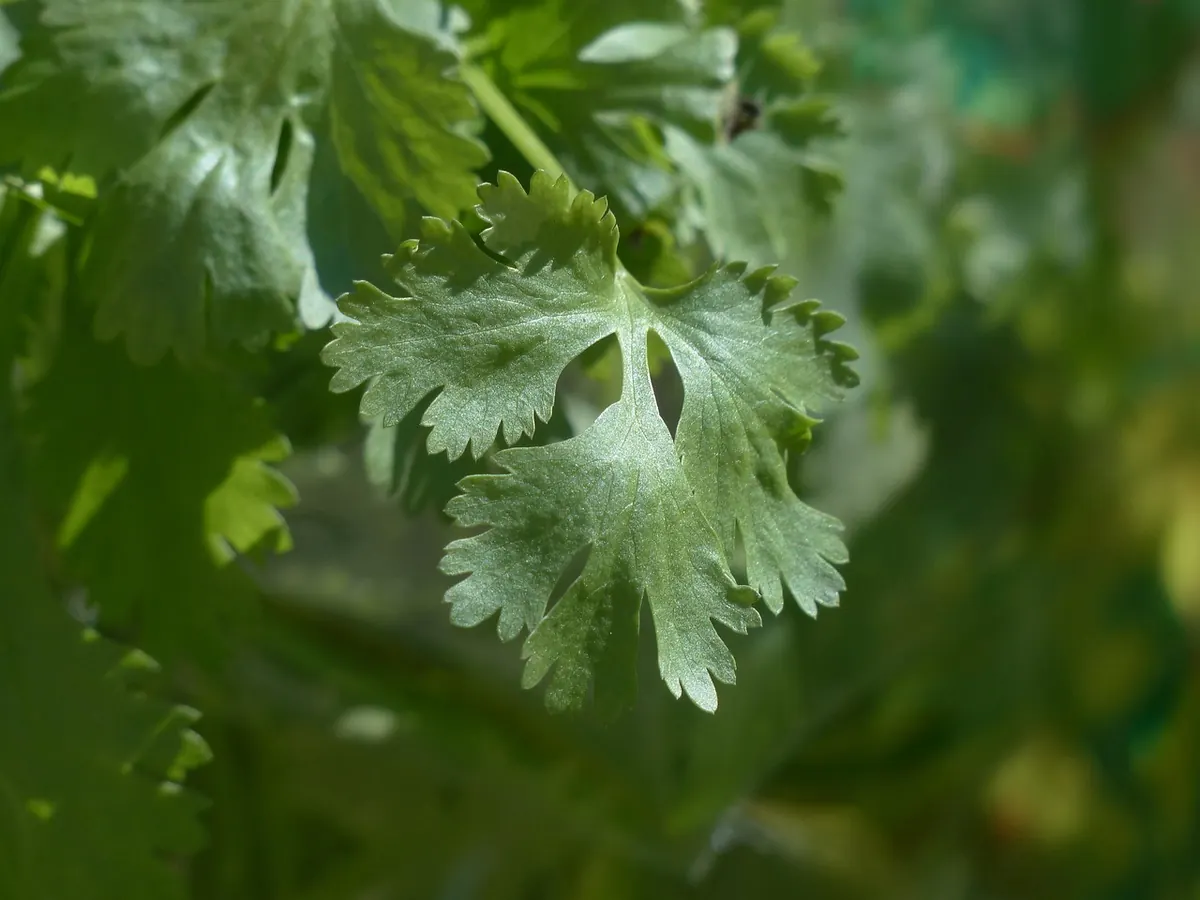
Coriander divides households. Some taste citrus and pepper; others taste soap, and if you are in the second camp you already know. The leaves are the usual crop, but the stems carry plenty of flavour and are worth chopping into curries. Add it off the heat.
Parsley is grassy, clean and slightly peppery. Flat-leaf has more flavour than curly and is the better choice for cooking; curly is prettier as a garnish. The stalks are the most useful part of all — save them for stocks and soups.
Starting them off: seed or supermarket pot?
Those cheap supermarket pots hold dozens of seedlings crammed together, competing for water and light. You can eat them quickly as a cut-and-come-again crop, or divide them into clumps of three or four and pot them on into 9cm pots of fresh peat-free multi-purpose compost. Basil from these pots rarely thrives for long without being split.
From seed, the three behave quite differently. Basil germinates in days and wants warmth and light to do it; coriander resents root disturbance and is best sown straight into its final pot; parsley is famously slow and can take two to four weeks, sometimes longer.
- Fill a 9cm pot with peat-free multi-purpose compost, firm it gently, water, and let it drain.
- Sow thinly — basil and coriander seeds about a centimetre apart, parsley a little wider.
- Cover coriander and parsley with about a centimetre of
Photo: Hans / Pixabay